Dostoevsky's last and greatest novel, The Karamazov Brothers (1880),is both a brilliantly told crime story and a passionate philosophicaldebate. the dissolute landowner Fyodor Pavlovich Karamazov ismurdered, his sons - the atheist intellectual Ivan, the hot-bloodedDmitry, and the saintly novice Alyosha - are all at som elevelinvolved. Bound up with this intense family drama is Dostoevsky'sexploration of many deeply felt ideas about the existence of God, thequestion of human freedom, the collective nature of guilt, thedisastrous consequences of rationalism. The novel is also richlycomic: the Russiam Orthodox Church, the legal system, and even theauthor's most cherished causes and beliefs are presented with a noteof irreverence, so that orthodoxy and radicalism, sanity and madness,love and hatred, right and wrong are no longer mutually exclusive.Rebecca West considered it the allegory for the world's maturity, butwith children to the fore. This new translation
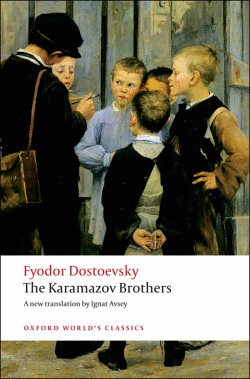
Dostoevsky's last and greatest novel, The Karamazov Brothers (1880),is both a brilliantly told crime story and a passionate philosophicaldebate. the dissolute landowner Fyodor Pavlovich Karamazov ismurdered, his sons - the atheist intellectual Ivan, the hot-bloodedDmitry, and the saintly novice Alyosha - are all at som elevelinvolved. Bound up with this intense family drama is Dostoevsky'sexploration of many deeply felt ideas about the existence of God, thequestion of human freedom, the collective nature of guilt, thedisastrous consequences of rationalism. The novel is also richlycomic: the Russiam Orthodox Church, the legal system, and even theauthor's most cherished causes and beliefs are presented with a noteof irreverence, so that orthodoxy and radicalism, sanity and madness,love and hatred, right and wrong are no longer mutually exclusive.Rebecca West considered it the allegory for the world's maturity, butwith children to the fore. This new translation